TEDxAccra Makes Its Return With a Bold Conversation on Ghana’s Future

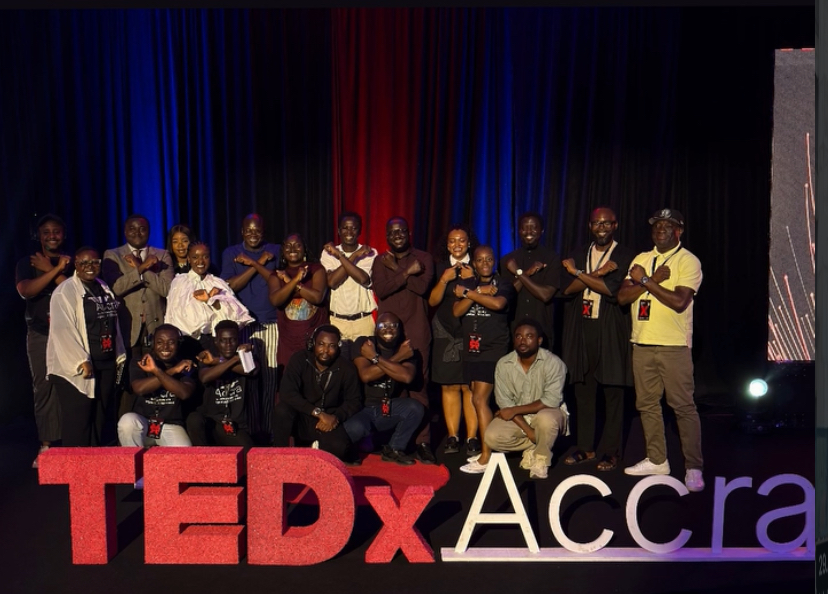
After a four-year absence, TEDxAccra has finally returned to Accra, bringing together voices from technology, manufacturing, environmental science, investment and the arts for its 2026 edition.
Held at the Ghana Law Auditorium on the University of Ghana’s Legon campus, this year’s edition was themed Symbiosis a theme that challenged speakers and attendees to rethink progress not as an individual pursuit, but as a process of collective evolution.
In a city where centuries-old traditions meet emerging technologies, rapid urban expansion and increasingly fragile ecosystems, TEDxAccra 2026 explored what it means for different systems, communities and ideas to coexist and grow together.
Six speakers from diverse fields took the stage, each offering a different perspective on the possibilities and challenges of building a more connected future for Ghana.
The event opened with Ama Yeboaa Adi-Dako Seidu and Kabiru Seidu, who introduced the audience to a “what if” approach to solving some of Accra’s most persistent challenges.
Their presentation eventually focused on the Odaw River, one of the capital’s most visibly degraded waterways. Through their work with Big Fat African Development (BFAD), they used the river as a practical example of the kind of problems that require collective action.
The Odaw, which thousands of Accra residents encounter every day, became more than an environmental issue during the presentation. It served as a reminder that the health of a city depends on the relationship between its people, infrastructure and natural environment.
Emmanuel Osei Ntim, General Manager and serial entrepreneur, took the audience into the world of FON Limited, the family-owned manufacturing business behind FON Tissue and FON Packaging. Sharing the story of a company his family has built over four decades, Ntim highlighted the scale at which Ghanaian businesses can operate when given the opportunity to grow. He revealed that FON produces approximately 250,000 boxes a day for Nestlé, while also working with major companies including Distell and Kasapreko. The company has, among other projects, contributed to packaging for products such as Savanna Dry. His presentation offered a glimpse into a side of Ghana’s manufacturing sector that is often overlooked, local companies quietly operating at significant scale and supporting some of the country’s biggest brands.

One of the day’s most memorable presentations came from Katya “The Destroyer,” Head of Environmental Initiatives, whose talk focused on one of Ghana’s most urgent environmental challenges: the restoration of the Korle Lagoon.
Widely regarded as one of the most polluted water bodies in West Africa, the lagoon has become a symbol of Accra’s complicated relationship with waste, development and the environment. Katya also reflected on her personal journey, including her time at Harvard and the ambition she once carried of going out into the world to “save the world.” Her presentation brought the broader theme of symbiosis into sharp focus, asking audiences to consider what it truly means to build sustainable communities when human development and environmental preservation are treated as competing interests.
Prof. Isaac Wiafe of the Department of Computer Science shifted the conversation toward technology, tackling one of the most important debates surrounding artificial intelligence on the continent. His presentation examined the question of whether Africa’s AI future should primarily depend on technologies developed elsewhere or whether the continent should focus on building its own locally relevant AI systems. The conversation touched on the importance of African researchers, institutions and developers playing a more active role in shaping the technologies that will increasingly influence the continent’s economies and societies. Artist and philanthropist Ibrahim Mahama closed the individual talks by taking the audience through aspects of Ghana’s history and his efforts to preserve them through art and cultural spaces. He highlighted the work of Red Clay Studio in Tamale, a creative and cultural space that has become closely associated with his efforts to collect, preserve and present important pieces of Ghana’s history.
Rather than viewing history as something confined to textbooks and museums, Mahama’s work demonstrates how art and physical spaces can become tools for keeping collective memory alive for future generations.
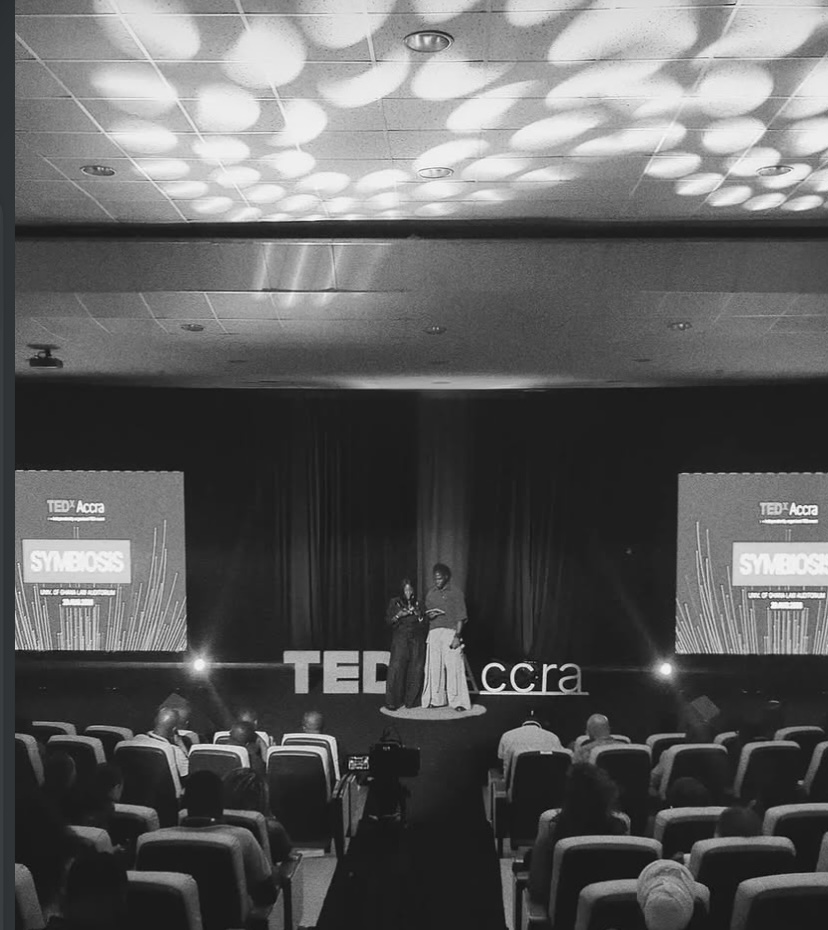
The event was hosted by Zuu and Afi, hosts of the Stay By Plan podcast, who guided the audience through the day’s conversations and presentations.
From polluted waterways and local manufacturing to environmental restoration, artificial intelligence and cultural preservation, TEDxAccra 2026 offered a broad interpretation of its “Symbiosis” theme.
The return of TEDAccra after four years was therefore more than a comeback. It was a reminder that some of Ghana’s biggest challenges and opportunities exist at the intersection of different people, industries, ideas and systems.
And perhaps that was the central message of the day, progress becomes more meaningful when we stop thinking about growth in isolation and start thinking about how we can grow together.
Sign up for the 3Music Newsletter for breaking news, events, and unique stories.
MORE FROM
entertainment
-

-

-

music entertainment fashion & lifestyle culture
Tems Rejects Afrobeats Label, Says “I Classify My Music as R&B”
By Walter Sena
September 1st, 2026
-

-
culture
Ghana Welcomes UN Call For Reparatory Justice Over Transatlantic Slave Trade
By Joshua Narh
September 1st, 2026
More From 3Music News
music | entertainment | fashion & lifestyle | culture | BY Walter Sena | September 1st, 2026
Kofi Mole Announces Star-Studded 4-Track EP 4 DA POPPIN
Ghanaian rapper Kofi Mole is set to make his return with a brand-new four-track EP titled ‘4 DA POPPIN’, scheduled for release on September 4, 2026.

music | fashion & lifestyle | culture | BY Walter Sena | September 1st, 2026
Former Gang Leader Duane ‘Keffe D’ Davis Found Guilty of Tupac Shakur’s Murder
Nearly three decades after the death of legendary rapper Tupac Shakur, a former gang leader has been found guilty of his murder.
culture | BY Angela Kuffour | August 31st, 2026
Teacher Unions Suspend Planned Strike After Talks With Education Minister
The unions had warned of action over delays in placing newly promoted teachers on the corresponding salary scales. Despite promotions, many teachers had not received the associated financial benefits.
culture | BY Angela Kuffour | August 31st, 2026
Nigeria Follows Ghana In Reporting South Africa To AU Over Xenophobia
President Bola Tinubu conveyed Nigeria’s position through Vice President Kashim Shettima, who represented him at the 21st Extraordinary Session of the AU Assembly in Luanda, Angola, on August 30, 2026.
culture | BY Joshua Narh | August 31st, 2026
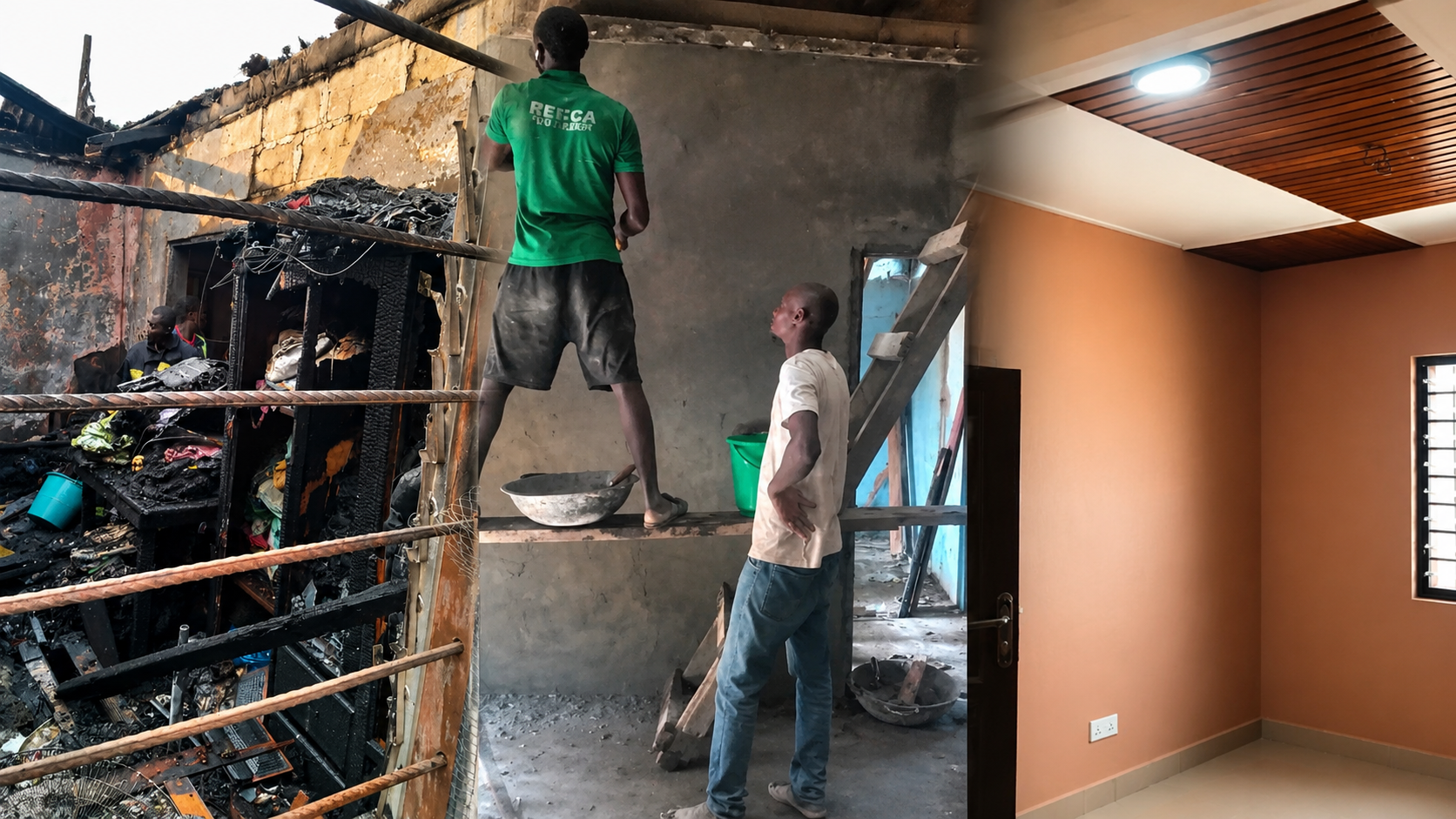
Police Inspector Self-Funds Rebuilding Of Fire-Damaged Barracks Room
A room assigned to him at the police barracks was destroyed by fire a year ago. With the necessary repairs yet to be carried out, Inspector Agyekum took the initiative to personally fund the restoration of the facility.

sports | BY Joshua Narh | August 31st, 2026
Lionel Messi Retires From Argentina Duty After 21-Year International Career
Messi revealed that he had written his retirement statement on 21 July, two days after the World Cup final, but had delayed making the announcement.

music | entertainment | BY Angela Kuffour | August 31st, 2026
Sarkodie Teases New Track With TeePhlow Produced By Da’Hammer
The message suggests the song draws on personal experiences. Sarkodie also urged his fanbase, known as SarkNation, to pressure Da’Hammer to release the track soon.

sports | BY Angela Kuffour | August 31st, 2026
Sir Alex Ferguson Attends Manchester United Match In Protective Boot
The 84-year-old former manager needed assistance getting out of his vehicle ahead of the Premier League clash against Ipswich Town but was able to make his way into the stadium under his own power.

culture | BY Angela Kuffour | August 31st, 2026
ECG And Four Other State Firms Post Losses for Fifth Straight Year - SIGA Reports
The persistently loss-making entities are ECG, Ghana Cylinder Manufacturing Company Limited, GNPA Limited, Graphic Communications Group Company Limited and Ghana Digital Centre.

entertainment | culture | BY Angela Kuffour | August 31st, 2026
Why BSIFF Is Putting Local Language Cinema At The Centre Of The Conversation
Are Africans watching African films? Not occasionally. Not because somebody sent them a link. Not because an African film happened to appear on a streaming platform. We mean watching them deliberately.
culture | BY Joshua Narh | August 31st, 2026
FDA Seizes Cigarette-Shaped Sweets In Accra, Arrests Seller
The FDA said the product has not been registered with the Authority, meaning its composition has not been assessed and approved under Ghana’s food safety requirements.

music | entertainment | fashion & lifestyle | BY Walter Sena | August 31st, 2026
Joana Gyan Cudjoe Parts Ways With Keche Global After Seven Years
Amenfi Central MP and businesswoman Joana Gyan Cudjoe has officially ended her seven-year professional relationship with Ghanaian music duo Keche Global.
More Similar Videos

music,entertainment | Lerny Lomotey | October 27th, 2025
Showboy Shares His Journey From Prison To Becoming Ghana's Biggest Trapper
Comments