Pregnancy And Childbirth Require Careful Financial Planning - Dr Aminarh


Medical practitioner Dr Chris Aminarh has urged prospective parents to plan financially for pregnancy, childbirth, and the period after delivery, saying the cost of having a child extends beyond the delivery procedure.
Speaking on the Big Convo segment of the Culture Daily morning show on 3Music TV and Pluzz 89.9FM, Dr Aminarh said expenses begin from the time a woman becomes pregnant and include antenatal care, laboratory tests, scans, medicines, and supplements.
He said expectant parents should also budget for transportation to health facilities and other expenses associated with regular antenatal visits.
According to Dr Aminarh, delivery costs vary depending on whether a woman has a vaginal delivery or a caesarean section, as well as whether she has health insurance.
He said figures from one facility showed that a caesarean section without insurance could cost about $3,800 on average, while the cost could range from GHS 3,800 to GHS 7,000 or GHS 8,000 depending on the facility and circumstances.
For patients with insurance, he said the procedure could cost around $2,800, with the total potentially ranging from GHS 2,800 to about GHS 5,000.
He stressed that those figures covered the procedure and did not include medicines and other additional expenses.
For vaginal delivery, Dr Aminarh said the cost in the facility he referenced was about GHS 500 with insurance and GHS 700 without insurance, again excluding medicines and feeding.
He said parents should also prepare for unexpected expenses, including blood, additional medication, prolonged hospital stays and neonatal intensive care if the baby requires specialised treatment.
Dr Aminarh advised expectant parents to budget beyond the basic delivery charges because complications can significantly increase the final bill.
He also highlighted the importance of preparing a hospital or “to-go” bag before labour.
The bag, he said, should contain items such as baby clothes, diapers, swaddles, and other supplies for the mother and baby during their hospital stay.
For mothers, he said the bag should also contain sanitary pads, wipes, and sanitiser.
Dr Aminarh said some nurses and midwives keep essential items at health facilities for mothers who arrive without the necessary supplies, but the cost is eventually added to the patient’s bill.
He therefore encouraged expectant mothers to prepare in advance rather than depend on healthcare facilities to provide forgotten items.
He also stressed the importance of antenatal care, saying regular checks allow health professionals to monitor the development of the baby and identify potential problems early.
According to him, routine monitoring includes ultrasound scans, checking foetal heart sounds and assessing the development of the baby.
He said women who move between health facilities during pregnancy should carry their medical records with them so that the new facility can continue monitoring their pregnancy based on previous information.
Dr Aminarh also advised parents to budget for expenses after delivery, including vaccinations and other healthcare needs.
He said childhood immunisations provided by the government are free and encouraged parents to ensure their children receive them.
He also noted that pregnancy does not prevent women from developing health conditions such as malaria and urinary tract infections, making regular medical care important.
Dr Aminarh further urged families to provide support to pregnant women, saying responsibility for a pregnancy should not be left solely to the woman or her husband.
He said relatives and other members of the family can contribute to the preparation and support required before and after childbirth.
He also encouraged men who wish to be present during childbirth to discuss the option with healthcare providers, noting that some facilities allow partners to be present depending on the circumstances.
Sign up for the 3Music Newsletter for breaking news, events, and unique stories.
MORE FROM
culture
-

-

culture
Contractor Hands Over Weija Children’s Hospital To Government
By Angela Kuffour
August 7th, 2026
-

culture
WAEC Releases Provisional 2026 BECE Results For Private Candidates
By Angela Kuffour
August 7th, 2026
-

sports
Coventry City Unveil Record Signing Caleb Yirenkyi With Ghana-Themed Promo Video
By Angela Kuffour
August 7th, 2026
-

culture
Liberia Camp Residents Urge Faster Completion of Kasoa-Winneba Road Project
By Angela Kuffour
August 7th, 2026
More From 3Music News

culture | BY Joshua Narh | August 7th, 2026
Telecel Changes Reward Strategy As M’AHITTI Puts Digital Transactions At Centre
The company says customers can begin earning points immediately after subscribing to the promotion, with additional points available when they use Telecel’s digital platforms.

music | entertainment | BY Joshua Narh | August 7th, 2026
How Rie Osei And Marince Omario Turned ADWUMA WURA From A Love Song Into An Anthem About Ambition
“I was like, no, let’s change the topic today. Let’s talk about money,” he recalled.

entertainment | BY Joshua Narh | August 7th, 2026
Rie Osei Reveals She Puts Personal Experiences Into Her Music
She said she avoids forcing lyrics when an idea is not developing naturally because doing so can affect the authenticity of the final work.
entertainment | BY Joshua Narh | August 7th, 2026
Marince Omario Traces Black Sherif, Joker Nana Connection To 2014 Collective
He said the idea began when he was in Form 2 at St Thomas Aquinas Senior High School, where he and his friends decided to operate as a collective rather than as a conventional music group.

culture | BY Joshua Narh | August 7th, 2026
Dr Aminarh Urges Couples To Ask For Genotype Early In a Relationship
He said genotype compatibility should be treated as an important part of choosing a partner because of the risk of having a child with sickle cell disease when two people who carry the sickle cell gene have children together.
culture | BY Joshua Narh | August 6th, 2026
Sheikh Aremeyaw Shaibu Reiterates Calls For Stronger Safety Measures After Helicopter Crash
According to Sheikh Aremeyaw Shaibu, the country must ensure that meaningful lessons are drawn from the deaths of the eight victims.

culture | BY Joshua Narh | August 6th, 2026
We Have Learned Bitter Lessons From Helicopter Crash - Rashid Tanko-Computer
"We have learned a lot. I mean, they died through action. They were going to launch this responsible community mining to fight galamsey. That was virtually what they were doing", he said.

culture | BY Joshua Narh | August 6th, 2026
Dr Omane Boamah’s Legacy Continues To Guide Elections Work - NDC’s Election Directorate
Mr Tanko-Computer said the remaining members of the Elections Directorate had continued to implement Dr Omane Boamah’s ideas and organisational approach, which he said had contributed to the successful conduct of the party’s recent branch elections.
culture | BY Joshua Narh | August 6th, 2026
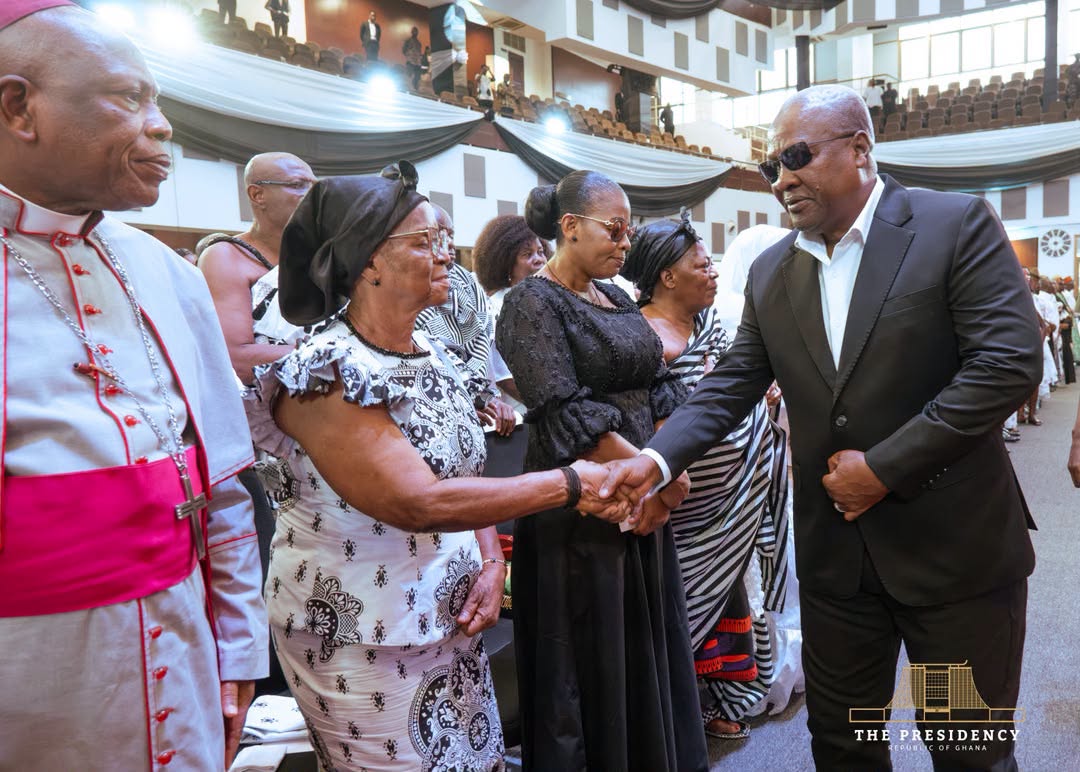
President Mahama Urges Ghanaians To Honour The Sacrifice Of August 6 Helicopter Crash Victims
The President who was speaking at a National Inter-Faith Memorial Service in Accra on Thursday to mark one year since the tragedy, said remembrance is not only about reflecting on the past but also about preserving the values on which the country is built.

sports | BY Angela Kuffour | August 6th, 2026
People Were Avoiding Me - Paul Pogba Reflects On Isolation During Doping Ban
He also mentioned that the worst experience during the period was when his wife Zulay, chose to avoid him sometimes.

music | entertainment | fashion & lifestyle | BY Angela Kuffour | August 6th, 2026
A$AP Rocky Says He’s Not Insecure About Rihanna’s Billions
The comments come as Rihanna’s net worth is estimated at around $1 billion to $1.4 billion, driven largely by her Fenty Beauty and Savage X Fenty businesses, according to reports citing Forbes.

music | entertainment | BY Joshua Narh | August 5th, 2026
Lyrical Joe Marks 10 Years Of 5TH AUGUST Series With EP
Over the years, fans have been treated to projects including 5th August 2017, 5th August 2018, 5th August 2019, 5th August 2020, 5th August V, 5th August VI, 5th August VII, 5th August VIII, and 5th August IX, each raising the bar for Ghanaian rap.
More Similar Videos

culture | 3Music TV | April 4th, 2024
Hammer Shares Music Production Experiences and Artiste Relationships
Comments